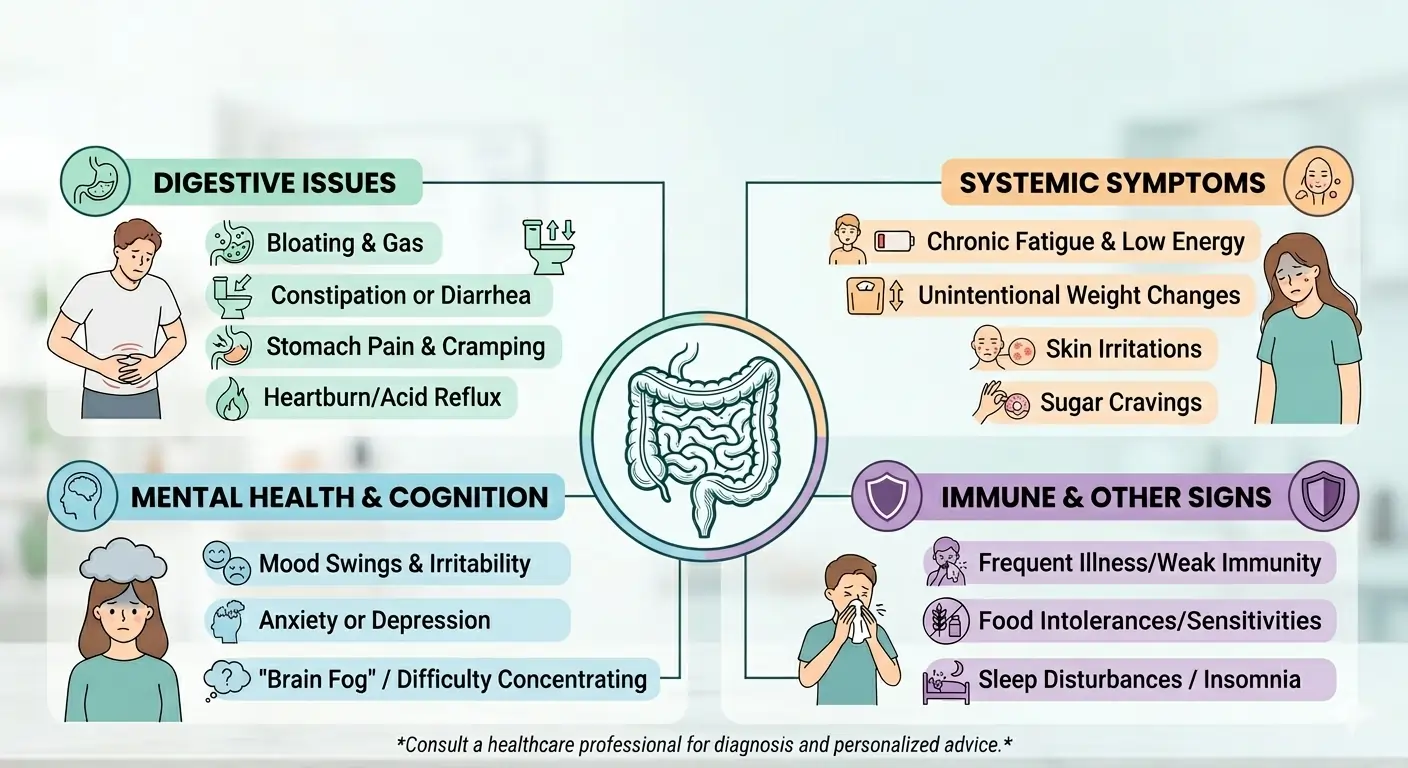


Your gut does much more than digest food. It plays an important role in nutrient absorption, immunity, metabolism, and even mood. When your digestive system is out of balance, it can affect your overall well-being in ways you may not immediately recognise.
Many people ignore the early symptoms of bad gut health, assuming they’re temporary or caused by everyday stress. However, persistent digestive discomfort or other unexplained symptoms could indicate that your gut needs attention.
At FitNova Wellness, we believe that long-term health begins with healthy lifestyle habits and a Whole Food Plant-Based (WFPB) approach that supports overall digestive wellness. In this article, we’ll discuss the most common signs of poor gut health and simple lifestyle changes that may help improve gut function naturally.
Table of Contents
- Why Is Gut Health Important?
- What Are the Common Signs of Poor Gut Health?
- Can Diet Improve Gut Health?
- What Does a Gut Reset Diet Plan Include?
- When Should You Consult a Gut Health Doctor?
- Expert Answer
- FAQs
Why Is Gut Health Important?
Your gut contains trillions of microorganisms that help digest food, produce essential nutrients, and support your immune system. A balanced gut microbiome contributes to better digestion, improved energy levels, and overall metabolic health.
When this balance is disturbed by poor eating habits, lack of sleep, stress, or excessive consumption of processed foods, it may lead to several signs and symptoms of poor gut health.
Recognising these warning signs early allows you to make positive lifestyle changes before they begin affecting your quality of life.
What Are the 10 Signs of Poor Gut Health?
1. Frequent Bloating
Occasional bloating is common, but frequent bloating after meals may indicate that your digestive system is struggling to process certain foods or that your gut microbiome is imbalanced.
Increasing fiber gradually, drinking enough water, and choosing whole, minimally processed foods may support healthier digestion.
2. Constipation or Irregular Bowel Movements
Regular bowel movements are an important indicator of digestive health.
Persistent constipation or irregular bowel habits are among the most common symptoms of bad gut health and may be influenced by low fiber intake, dehydration, inactivity, or other health conditions.
3. Excessive Gas
Passing gas is normal, but excessive gas accompanied by abdominal discomfort could suggest poor digestion or an imbalance in gut bacteria.
Keeping a food diary may help identify foods that trigger symptoms.
4. Frequent Diarrhea
Recurring diarrhea should never be ignored. It may result from infections, food intolerances, digestive disorders, or changes in the gut microbiome.
If symptoms persist, seek medical advice rather than relying on home remedies alone.
5. Food Intolerances
Difficulty digesting certain foods may indicate an underlying digestive issue.
Unlike food allergies, food intolerances often develop gradually and may cause bloating, gas, stomach pain, or diarrhea after eating specific foods.
6. Constant Fatigue
Although fatigue has many possible causes, poor nutrient absorption due to digestive problems may contribute to low energy levels.
A balanced diet, quality sleep, and addressing digestive concerns can support overall wellness.
7. Unexplained Weight Changes
Unexpected weight gain or weight loss without changes in eating habits or physical activity may sometimes be linked to digestive health or other underlying medical conditions.
A healthcare professional can help determine the cause.
8. Frequent Sugar Cravings
A diet high in refined sugar and ultra-processed foods may influence the balance of bacteria in the gut.
Choosing whole grains, fruits, vegetables, legumes, nuts, and seeds may help support healthier eating habits and improve satiety.
9. Skin Problems
Emerging research suggests that gut health and skin health may be connected.
While skin conditions have many causes, persistent acne, eczema, or unexplained skin irritation may warrant a broader evaluation of overall health, including digestive well-being.
10. Poor Immunity
A significant portion of the immune system is associated with the gut.
Frequent infections or slow recovery from illness may be among the signs of bad gut health, although many other factors can also affect immunity.
Can Diet Improve Gut Health?
Diet is one of the most important factors influencing gut health.
Eating a variety of fiber-rich foods helps nourish beneficial gut bacteria and supports healthy digestion. A whole food plant-based eating pattern emphasises:
- Fresh vegetables
- Seasonal fruits
- Whole grains
- Lentils and legumes
- Nuts and seeds
- Adequate water intake
Limiting highly processed foods, sugary beverages, and excessive refined foods may also contribute to better digestive health.
What Does a Gut Reset Diet Plan Include?
Many people search for a gut reset diet plan in India, hoping for a quick solution. In reality, improving gut health is usually a gradual process built on consistent healthy habits rather than short-term detoxes.
A balanced gut-supportive eating plan may include:
- Oats or millet for breakfast
- Seasonal fruits as snacks
- Dal, brown rice, and vegetables for lunch
- Mixed salads and sprouts
- Beans and lentils several times a week
- Plenty of water throughout the day
Consistency is more important than following restrictive diets or eliminating multiple food groups without professional guidance.
When Should You Consult a Gut Health Doctor?
Occasional digestive discomfort is common, but persistent symptoms should not be ignored.
Consider consulting a gut health doctor in Pune, India, if you experience:
- Ongoing bloating
- Persistent constipation or diarrhea
- Blood in stools
- Unexplained weight loss
- Severe abdominal pain
- Digestive symptoms lasting several weeks
Early evaluation can help identify the underlying cause and ensure appropriate management.
Expert Answer
What Is the Most Important Step Toward Better Gut Health?
According to Dr Archana, increasing the variety of whole plant foods in your diet is one of the most effective ways to support a diverse and healthy gut microbiome. A diet rich in fiber from vegetables, fruits, legumes, whole grains, nuts, and seeds provides nourishment for beneficial gut bacteria and supports long-term digestive health.
Frequently Asked Questions
What are the earliest signs of poor gut health?
Common early signs include bloating, constipation, excessive gas, irregular bowel movements, and food intolerances. Persistent symptoms should be evaluated by a healthcare professional.
Can poor gut health affect weight?
Yes. Digestive health may influence appetite, metabolism, and nutrient absorption, although weight changes can have many different causes.
How long does it take to improve gut health?
The timeline varies depending on individual health, diet, lifestyle, and underlying conditions. Consistent healthy habits generally provide better long-term results than short-term detox plans.
Is a gut reset diet safe?
A balanced eating plan that emphasizes whole, minimally processed foods is generally a healthier approach than extreme detoxes or restrictive diets. Always seek professional advice before making significant dietary changes.
When should I see a gut health doctor?
If digestive symptoms persist for several weeks, become severe, or are accompanied by unexplained weight loss, blood in stools, or severe pain, consult a qualified healthcare professional.
Can lifestyle changes improve gut health?
Healthy eating, regular physical activity, adequate sleep, stress management, and staying hydrated all contribute to better digestive wellness.
Disclaimer: This article is intended for educational purposes only and should not replace professional medical advice, diagnosis, or treatment. Consult a qualified healthcare professional for personalised guidance regarding digestive or other health concerns.
Supporting Your Gut Health Naturally
Healthy digestion is built on consistent daily habits rather than quick fixes. Eating a variety of whole plant foods, staying active, managing stress, and getting enough sleep can all contribute to a healthier gut microbiome over time.
At FitNova Wellness, we encourage a sustainable whole-food plant-based lifestyle and personalised wellness strategies to support digestive health and overall well-being. If you’re experiencing persistent digestive symptoms, seeking timely medical guidance can help you identify the underlying cause and take appropriate steps toward better health.