

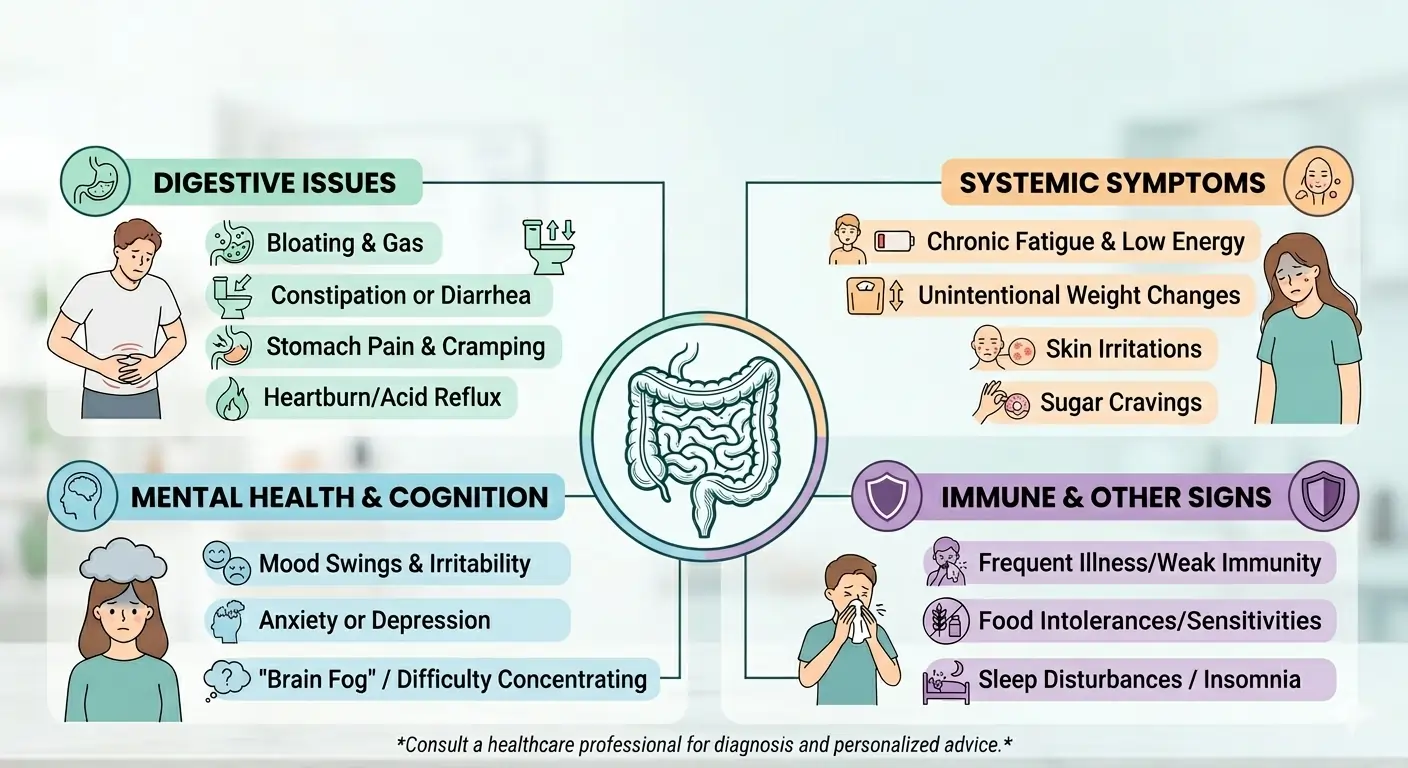
Gut health plays an important role in digestion, nutrient absorption and regular bowel function. The digestive system also contains trillions of microorganisms that interact with the body and contribute to overall health.
When digestive health is not optimal, people may experience symptoms such as bloating, constipation, diarrhoea, excessive gas or abdominal discomfort. However, these symptoms can have many different causes and do not automatically mean that someone has an unhealthy gut.
Understanding poor gut health symptoms can help you pay attention to recurring digestive changes while avoiding unnecessary self-diagnosis. A balanced diet, regular physical activity, adequate sleep and stress management can all contribute to healthier lifestyle habits.
Table of Contents
- What Does Gut Health Mean?
- What Are the Signs of Poor Gut Health?
- What Are 10 Signs of an Unhealthy Gut?
- What Can Cause Poor Gut Health?
- How Can a Whole Food Plant-Based Diet Support Gut Health?
- What Healthy Habits Can Improve Gut Health?
- When Should You Seek Professional Advice?
- Expert Answer
- Frequently Asked Questions
- Building Better Gut Health Through Sustainable Habits
What Does Gut Health Mean?
Gut health refers to the functioning of the digestive system and the microorganisms living within the gastrointestinal tract. Healthy digestion involves processing food, absorbing nutrients and maintaining regular bowel movements.
Gut health can be influenced by nutrition, physical activity, sleep, stress, medications and overall lifestyle.
There is no single symptom that can confirm whether a person’s gut is “healthy” or “unhealthy.” Recurring digestive symptoms should be considered in the context of a person’s overall health.
What Are the Signs of Poor Gut Health?
People often search for what are signs of poor gut health when they experience recurring digestive problems.
Common signs of poor gut health may include:
- Frequent bloating
- Constipation
- Diarrhoea or loose stools
- Excessive gas
- Abdominal discomfort
- Changes in bowel habits
- Food-related digestive discomfort
- Feeling unusually uncomfortable after certain meals
An occasional episode of bloating or constipation does not necessarily indicate poor gut health. Persistent or unexplained symptoms deserve appropriate attention.
What Are 10 Signs of an Unhealthy Gut?
When people search for 10 signs of an unhealthy gut, they are usually looking for common symptoms that may indicate their digestive health needs attention.
| Sign or Symptom | Possible Factors |
| Frequent bloating | Gas, constipation or food intolerance |
| Constipation | Low fiber intake, inadequate fluids or inactivity |
| Diarrhoea | Infection, food intolerance, medication or other conditions |
| Excessive gas | Dietary factors or digestive intolerance |
| Abdominal discomfort | Various gastrointestinal factors |
| Irregular bowel movements | Diet, hydration or digestive changes |
| Food-related discomfort | Possible intolerance or sensitivity |
| Changes in appetite | Stress, illness or other factors |
| Discomfort after meals | Meal patterns or food-related factors |
| Recurring digestive symptoms | May require professional evaluation |
These symptoms do not automatically prove that someone has an unhealthy gut. Their underlying cause needs to be considered.
1. Frequent Bloating
Bloating can occur because of gas, constipation, food intolerance or other digestive factors. Frequent or persistent bloating should not simply be labelled as poor gut health.
2. Irregular Bowel Movements
Changes in bowel habits may occur because of dietary changes, hydration, physical activity, medications or digestive conditions.
3. Constipation
Difficulty passing stools or infrequent bowel movements can be associated with low dietary fiber, inadequate fluid intake, inactivity, medications and other factors.
4. Diarrhoea
Repeated loose or watery stools can have several causes, including infections, medications, food intolerance and digestive disorders.
5. Excessive Gas
Gas is a normal part of digestion. However, persistent or uncomfortable gas, particularly when accompanied by other symptoms, may require attention.
6. Abdominal Discomfort
Recurring abdominal pain, cramping or discomfort should not automatically be attributed to an unhealthy gut. Persistent symptoms may require professional assessment.
7. Changes in Food Tolerance
Some people notice bloating or discomfort after particular foods. This may be related to food intolerance or another digestive issue.
8. Changes in Appetite
Changes in appetite can occur due to stress, illness, medications and various other factors. Persistent unexplained changes should be discussed with a healthcare professional.
9. Discomfort After Meals
Regular discomfort after eating may be related to meal patterns, food choices, intolerance or another underlying issue.
10. Recurring Digestive Symptoms
One of the important signs you have poor gut health may be recurring digestive symptoms that interfere with everyday life. Persistent symptoms deserve proper evaluation rather than self-treatment.
What Can Cause Poor Gut Health?
There is no single cause of digestive problems. Several lifestyle and medical factors can affect gastrointestinal health.
A diet low in dietary fiber and high in highly processed foods may not provide the variety of nutrients and fiber that support digestive health.
Other contributing factors may include:
- Low physical activity
- Inadequate fluid intake
- Poor sleep
- Chronic stress
- Certain medications
- Food intolerances
- Gastrointestinal infections
- Existing digestive conditions
This is why signs and symptoms of poor gut health should be considered carefully rather than assuming that a particular detox or “gut reset” is necessary.
How Can a Whole Food Plant-Based Diet Support Gut Health?
A Whole Food Plant-Based diet is an important part of FitNova’s lifestyle philosophy. It focuses on whole or minimally processed foods from plant sources.
This approach emphasizes:
- Vegetables and leafy greens
- Whole fruits
- Whole grains
- Lentils and beans
- Chickpeas and other legumes
- Nuts and seeds
- Other naturally fiber-rich plant foods
Dietary fiber supports normal bowel function and provides nourishment for microorganisms in the digestive tract. If you need structured guidance, a gut health and nutrition program can help you develop sustainable nutrition and lifestyle habits for better digestive wellness.
If someone currently consumes very little fiber, increasing fiber gradually may be more comfortable for digestion. Adequate fluid intake is also important.
FitNova’s approach is specifically Whole Food Plant-Based. It is not a restrictive detox program and does not advocate foods of animal origin such as non-vegetarian foods, fish or dairy.
What Healthy Habits Can Improve Gut Health?
Supporting digestive health does not require an extreme cleanse or restrictive diet. Sustainable daily habits can provide a better foundation.
| Healthy Habit | Practical Approach |
| Whole plant foods | Eat a variety of vegetables, fruits, whole grains and legumes |
| Dietary fiber | Increase fiber-rich foods gradually |
| Hydration | Maintain adequate fluid intake |
| Physical activity | Include regular walking or suitable exercise |
| Sleep | Maintain a consistent sleep routine |
| Stress management | Try meditation, breathing exercises or yoga |
| Processed foods | Reduce reliance on highly processed foods |
| Eating habits | Pay attention to foods that consistently cause discomfort |
Include More Fibre-Rich Plant Foods
Vegetables, fruits, whole grains, beans, lentils, chickpeas, nuts and seeds can provide dietary fiber and other nutrients.
Stay Physically Active
Regular physical activity supports overall health and may also support normal bowel function. Walking, cycling, yoga and other suitable activities can be incorporated into daily routines.
Prioritize Sleep
Good-quality sleep is an important part of overall well-being. Maintaining a consistent sleep schedule can support healthier lifestyle habits.
Manage Stress
Stress may affect digestive function in some people. Meditation, breathing exercises, yoga and regular outdoor walks may help support stress management.
When Should You Seek Professional Advice?
Not every digestive symptom requires medical attention, but persistent, severe or unexplained symptoms should be evaluated.
Professional advice is particularly important if you experience ongoing abdominal pain, persistent diarrhoea or constipation, unexplained weight loss, blood in the stool, repeated vomiting, difficulty swallowing or other concerning changes.
People searching for weak gut health symptoms should also remember that “weak gut” is not a specific medical diagnosis. Symptoms need to be assessed according to their actual cause.
Expert Answer
According to Dr Archana Shinde, a sustainable approach to gut health should focus on overall lifestyle rather than quick-fix detoxes or restrictive gut cleanses. A Whole Food Plant-Based eating pattern, regular physical activity, adequate sleep, stress management and attention to individual digestive symptoms can form the foundation of a healthier lifestyle.
Persistent digestive symptoms should not simply be labelled as “poor gut health.” Identifying the underlying cause and seeking appropriate professional evaluation is important when symptoms are ongoing or concerning.
Frequently Asked Questions
What are poor gut health symptoms?
Common poor gut health symptoms may include recurring bloating, constipation, diarrhoea, excessive gas, abdominal discomfort and changes in bowel habits. These symptoms can have many different causes.
What are the most common signs of poor gut health?
Common symptoms of bad gut health include recurring bloating, irregular bowel movements, constipation, diarrhoea, excessive gas and abdominal discomfort. Persistent symptoms should be assessed rather than self-diagnosed.
What are signs you have poor gut health?
Recurring digestive discomfort, persistent changes in bowel habits, bloating, excessive gas and food-related digestive symptoms may indicate that your digestive health needs attention. They do not necessarily prove that your gut is unhealthy.
Can a Whole Food Plant-Based diet support gut health?
A Whole Food Plant-Based diet provides vegetables, fruits, whole grains, legumes, nuts and seeds. These foods can provide dietary fiber and a variety of nutrients that support overall digestive health.
Is a gut detox necessary?
There is no universal need for a restrictive gut detox or cleanse. A sustainable eating pattern, regular movement, adequate hydration, quality sleep and stress management are more practical foundations for overall health.
When should I see a gut health doctor in Pune?
If digestive symptoms are persistent, severe, unexplained or affecting daily life, consult a qualified healthcare professional. They can assess the symptoms and determine whether further investigation is needed.
Building Better Gut Health Through Sustainable Habits
Gut health is influenced by nutrition, physical activity, sleep, stress and several other factors. A Whole Food Plant-Based lifestyle built around vegetables, fruits, whole grains, legumes, nuts and seeds can provide dietary fiber and a wide range of nutrients that support overall health and digestive function.
The goal should not be an extreme detox or restrictive gut-reset plan. Instead, focus on sustainable habits that can be maintained over the long term.
FitNova Wellness follows a Whole Food Plant-Based lifestyle approach, focusing on sustainable nutrition and healthy daily habits rather than quick fixes.
Disclaimer: This article is for educational purposes only and does not replace professional medical advice, diagnosis or treatment. Persistent, severe or unexplained digestive symptoms should be evaluated by a qualified healthcare professional.