
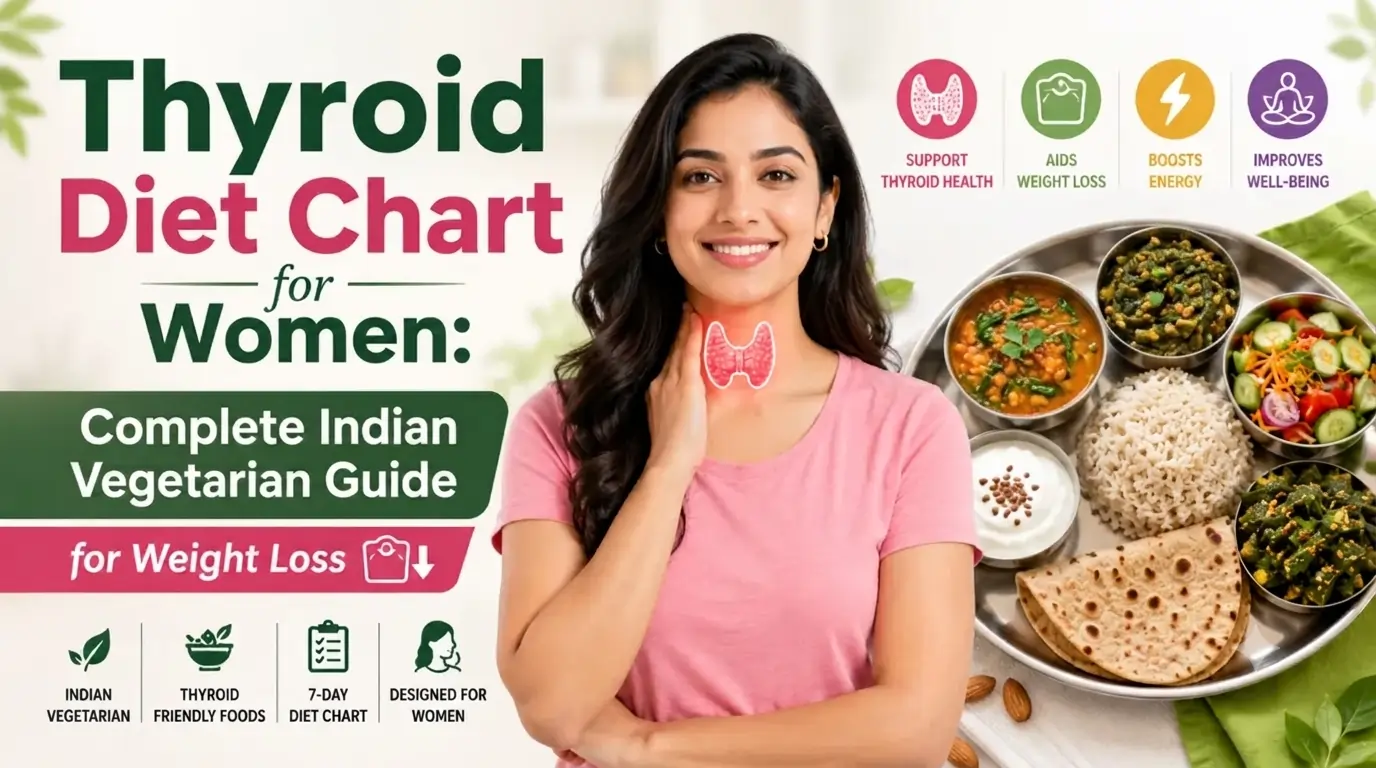
Managing thyroid health and maintaining a healthy weight can sometimes feel challenging, particularly for women living with hypothyroidism. Thyroid hormones influence metabolism, energy levels and several body functions, so changes in thyroid function may be associated with fatigue, weight changes and difficulty maintaining a healthy routine.
However, there is no single food or restrictive diet that can treat thyroid disease. Nutrition works best as part of a broader lifestyle approach that includes appropriate medical care, physical activity, sleep and stress management.
A balanced thyroid diet for women should focus on nutrient-dense, minimally processed foods while supporting overall metabolic health. FitNova Wellness follows a Whole Food Plant-Based approach built around vegetables, fruits, whole grains, legumes, nuts and seeds.
Table of Contents
- How Does Thyroid Health Affect Weight?
- What Should a Thyroid Diet for Women Include?
- What Does a Woman’s Thyroid Diet Chart for Weight Loss Look Like?
- Which Foods Should Women Limit?
- How Can Lifestyle Habits Support Thyroid-Related Weight Management?
- When Should You Consult a Thyroid Specialist?
- Expert Answer
- Frequently Asked Questions
- Building Sustainable Thyroid-Friendly Lifestyle Habits
How Does Thyroid Health Affect Weight?
The thyroid gland produces hormones that influence metabolism and energy use. When thyroid hormone levels are low, some people may experience symptoms such as tiredness, feeling cold, constipation and weight gain.
However, thyroid-related weight changes can have several contributing factors. Medication, calorie intake, physical activity, sleep, stress, age and other health conditions can also influence body weight.
This is why a thyroid weight loss diet plan should not focus only on reducing calories. The goal should be to build sustainable eating and lifestyle habits while ensuring that any diagnosed thyroid condition is appropriately managed.
What Should a Thyroid Diet for Women Include?
A balanced thyroid diet for women should provide a variety of nutrients without relying on highly restrictive rules.
A whole-food, plant-based eating pattern can include:
- Green leafy vegetables
- Seasonal vegetables
- Whole fruits
- Whole grains
- Millets
- Oats
- Brown rice
- Lentils
- Beans
- Chickpeas
- Nuts
- Seeds
These foods provide fiber, vitamins, minerals and other beneficial plant compounds that can contribute to overall health.
Why Is Protein Important?
Protein is important for maintaining muscle mass and supporting satiety. Plant-based sources such as lentils, beans, chickpeas, peas, soy foods, nuts and seeds can contribute to daily protein intake.
Individual nutritional requirements vary, so portions should be adjusted according to age, activity level, body composition and overall health.
What About Iodine?
Iodine is required for thyroid hormone production, but more is not necessarily better. Both insufficient and excessive iodine intake can be problematic.
People with thyroid conditions should avoid taking iodine supplements or making major dietary changes without professional advice. Iodised salt can provide iodine, but overall intake should remain appropriate for individual needs.
What Does a Woman Thyroid Diet Chart for Weight Loss Look Like?
People frequently search for a woman thyroid diet chart for weight loss or thyroid diet chart for weight loss because they want a simple daily structure.
Instead of following a rigid chart, consider the following Whole Food Plant-Based meal framework:
| Meal | Whole Food Plant-Based Options | Purpose |
| Breakfast | Vegetable oats, vegetable poha, millet preparation or whole-grain breakfast with fruit | Provides fiber and sustained energy |
| Mid-morning | Seasonal fruit with a small portion of nuts or seeds | Adds nutrients and healthy fats |
| Lunch | Brown rice or millet, dal or beans, cooked vegetables and salad | Provides fiber, protein and complex carbohydrates |
| Evening snack | Roasted chickpeas, fruit or a small portion of nuts or seeds | Helps reduce reliance on highly processed snacks |
| Dinner | Vegetable soup with legumes, millet roti with vegetables and dal, or a whole-grain vegetable meal | Provides a balanced evening meal |
| Fluids | Water and other suitable unsweetened beverages | Supports adequate hydration |
The exact portions should be individualised according to a woman’s age, activity level, body composition, thyroid status and overall health.
This type of thyroid diet chart for weight loss should be viewed as a general framework rather than a prescription or fixed meal plan.
What Should a Breakfast Include?
A nutritious breakfast can combine whole grains or millets with vegetables, along with fruit, nuts or seeds where appropriate. Vegetable oats, vegetable poha and millet-based preparations are practical options.
What Can Lunch Include?
Lunch can combine whole grains or millets with dal, beans or chickpeas and a variety of vegetables. Including different plant foods can increase dietary variety and fiber intake.
What About Dinner?
Dinner can include vegetables, legumes and whole grains in appropriate portions. A vegetable and lentil soup, millet roti with vegetables and dal, or another minimally processed plant-based meal can be considered.
Which Foods Should Women Limit?
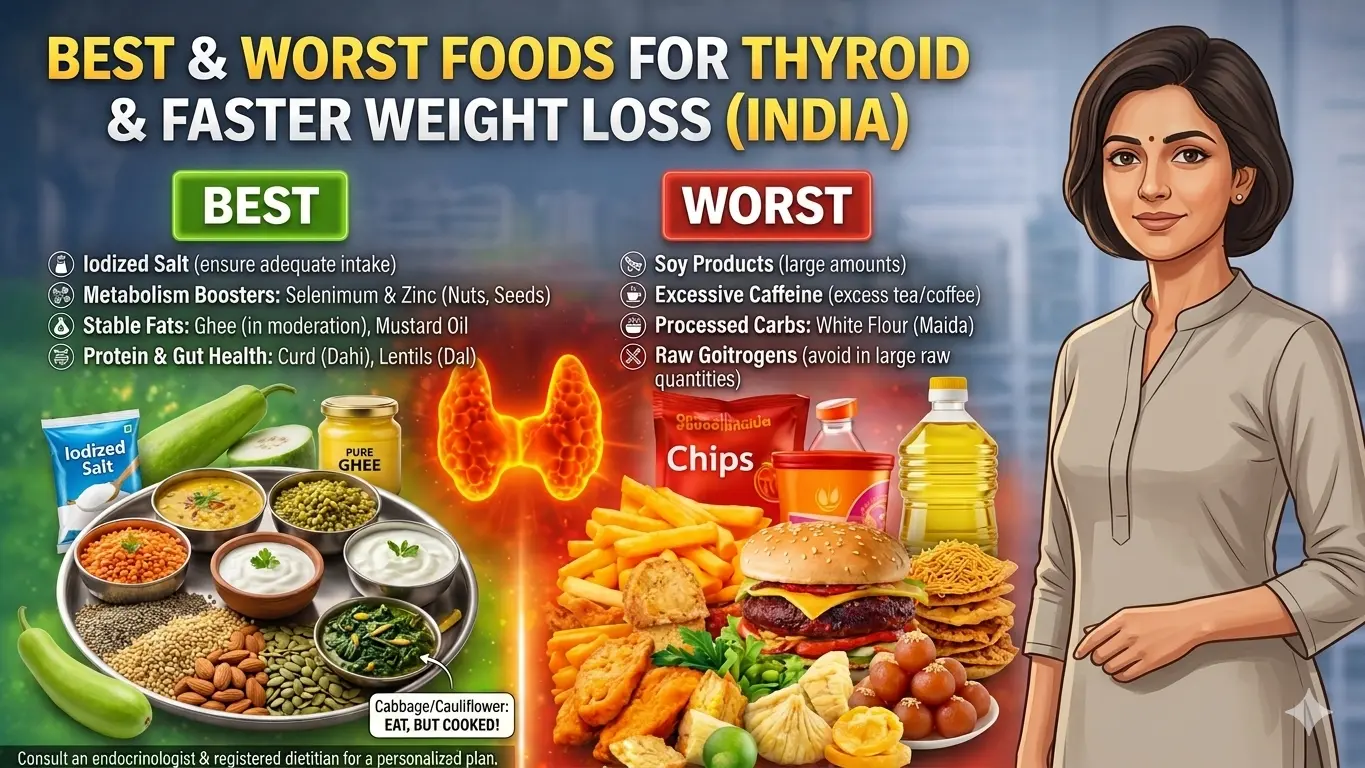
There is no universal list of foods that every woman with a thyroid condition must completely avoid.
However, limiting highly processed foods and sugary beverages can support overall metabolic health. These may include:
- Sugary drinks
- Packaged sweets
- Refined snacks
- Deep-fried processed foods
- Foods high in added sugar
- Highly refined foods
A whole-food plant-based approach emphasizes whole and minimally processed plant foods rather than relying heavily on packaged diet products.
Should Soy Be Avoided?
Soy is often discussed in relation to thyroid health. Soy does not need to be automatically eliminated from the diet for everyone with hypothyroidism.
However, soy and other foods may affect the absorption of thyroid medication in certain circumstances. People taking thyroid medication should follow their healthcare professional’s instructions regarding medication timing and food interactions.
Calcium, iron and certain supplements may also interfere with thyroid medication absorption when taken too close to the medication. Always follow the instructions provided by your healthcare professional.
How Can Lifestyle Habits Support Thyroid-Related Weight Management?
Nutrition is only one part of healthy weight management.
Stay Physically Active
Regular physical activity can support cardiovascular health, muscle strength, energy expenditure and overall well-being.
Walking, strength training, cycling, yoga or other suitable activities can be incorporated according to fitness level and medical needs.
Prioritize Sleep
Poor sleep can make healthy weight management more difficult by affecting energy, appetite and daily routines.
Aim for a consistent sleep schedule and adequate quality sleep.
Manage Stress
Long-term stress can influence eating behaviour, sleep and overall well-being. Simple practices such as breathing exercises, meditation, yoga and outdoor walks may help.
Follow Prescribed Thyroid Treatment
Diet should complement—not replace—appropriate thyroid treatment.
If you have been prescribed thyroid medication, take it according to your healthcare professional’s instructions. Do not stop or change medication because of dietary changes.
When Should You Consult a Thyroid Specialist?
If you experience unexplained weight changes, persistent fatigue, constipation, sensitivity to cold, changes in menstrual patterns or other symptoms associated with thyroid dysfunction, professional evaluation may be appropriate.
A thyroid specialist in Pune can assess your symptoms, medical history and relevant thyroid tests to determine the appropriate course of care.
People searching for a thyroid weight loss diet plan in India should also remember that dietary requirements vary from person to person. A plan that works for one individual may not be appropriate for another.
Expert Answer
Can Diet Help Women Manage Weight With Thyroid Problems?
According to Dr Archana Shinde, healthy weight management should focus on sustainable lifestyle habits rather than restrictive diets. A whole-food, plant-based eating pattern that emphasizes vegetables, fruits, whole grains, legumes, nuts and seeds can support overall nutritional quality, while regular physical activity, adequate sleep and stress management complement healthy eating habits.
However, thyroid disease requires appropriate medical evaluation and management. Diet should support overall health but should not be considered a replacement for prescribed thyroid treatment.
Frequently Asked Questions
What is the best thyroid diet for women?
There is no single diet that is best for every woman with thyroid disease. A balanced Whole Food Plant-Based pattern emphasizing vegetables, fruits, whole grains, legumes, nuts and seeds can support overall nutrition and healthy weight management.
Can a thyroid diet help with weight loss?
A nutritious eating pattern can support healthy weight management, but weight changes depend on several factors. Thyroid function and prescribed treatment should also be appropriately managed.
What should a woman thyroid diet chart for weight loss include?
A practical woman thyroid diet chart for weight loss can include vegetables, fruits, whole grains, legumes, nuts and seeds, with portions adjusted according to individual energy and nutritional requirements.
Should women with thyroid problems avoid soy?
Soy does not need to be automatically eliminated by everyone with thyroid disease. However, people taking thyroid medication should follow professional guidance regarding medication timing and potential food interactions.
Can thyroid medication be replaced with diet?
No. Dietary changes should not be used as a substitute for prescribed thyroid medication. Anyone considering changes to thyroid treatment should speak with their healthcare professional.
Is a thyroid weight loss diet plan in India different for every woman?
Yes. A thyroid weight-loss diet plan in India should consider factors such as thyroid status, age, activity level, dietary preferences, body composition, and other health requirements.
Building Sustainable Thyroid-Friendly Lifestyle Habits
A healthy approach to thyroid-related weight management is not about finding one “magic” food or following a highly restrictive thyroid diet for weight loss.
Instead, focus on a balanced Whole Food Plant-Based lifestyle that includes vegetables, fruits, whole grains, legumes, nuts and seeds. Combine this with regular movement, adequate sleep, stress management and appropriate medical care.
FitNova Wellness follows a Whole Food Plant-Based approach that emphasises sustainable nutrition and lifestyle habits over quick fixes or restrictive diets.
If you have a diagnosed thyroid condition or persistent symptoms, work with a qualified healthcare professional to ensure your thyroid health is appropriately evaluated and managed.